Monday, June 20, 2016

Rolandvue 3rd Week May,Greater Celandine,Sensitive Fern,Fleabane,Bittersweet Nightshade


The patch of yellow flowers on the north side of Rolandvue across from the entrance of Cloverlea are likely to be greater celandine.  They follow most of the criteria, erect, perennial, four yellow petals and pinnate leaves with wavy margins.  There is also the orange sap seen with the Wood Poppy.  It is toxic due to alkaloids, but supposedly useful in folk medicine at the proper dosage.

Orange toxic sap of the greater celandine

Greater celandine,four yellow petals,thin seed
Latin is Chelidonium, other common names are wartweed, Devil's milk,and rock poppy. It shares the four petal yellow flower and the orange sap with the wood poppy but the seeds are different.  Greater celandine has long narrow seeds compared to the fat fuzzy seeds of the wood poppy(which was fifty yards up Cloverlea last week). This plant is introduced,becoming invasive while the poppy is native. Some raise the wartweed and some suggest pulling it up before it goes to seed while wearing gloves to avoid the toxic sap.


The sensitive ferns are back on the west side of Cloverlea just as it enters Rolandvue ,on both sides of the utility pole. The name derives from its sensitivity to the first fall frost.  It is variously reported as native or originating in the far east.  The photo shows the sterile frond this week, the fertile frond should be smaller and beaded, appearing in July and August. Stay tuned.


sensitive fern,sterile frond, from a clump at corner Rolandvue and Cloverlea


Bittersweet nightshade can be found along the south side of Rolandvue going uphill toward Charles street.   It is a relative of the tomato, but contains more concentrated solanine a moderately effective poison.  Nightshade conjures images of the Borgias.  It has been blooming this week, will go to a red berry sometimes attractive to children. It has medicinal uses but best avoided. The leaves have this arrow shape with lobes at the base. It can climb as high as 4 meters if supported.
bittersweet nightshade,lobed leaf
group of bittersweet nightshade flowers
close-up of flower,four purple petals,yellow stamen
pointed style


The last photo shows a flower also seen along the Bellona end of Rolandvue.   Here is another place for latin, we are calling it fleabane but this is used for a number of similar flowers in the aster family.  But it does have the central yellow disc with numerous white rays. The lanceolate lower leaves are said to be edible but are hairy, possibly unpleasant.
Cooking helps.


enlarged view of the lance-shaped hairy leaves and stem of the fleabane

multiple rays of the fleabane flower
overall appearance of fleabane


Monday, May 9, 2016

Rolandvue 2nd Week of May: Indian Strawberry,Harvesting Bamboo

In the last entry we spent much of the week crawling through ground cover, then checking for ticks.  Here is another small ground cover mentioned here because the yellow flower separates it from the other wild strawberry.  The mock, or Indian strawberry is also edible but apparently has no flavor. No direct opinion as yet, but given the common yellow flower expect most of the later fruit may be tasteless.


   Another common ground cover is the lesser Celandine.  It is invasive (native to Europe) and prefers shady moist areas. The flower illustration is from Wikipedia since the flower is generally gone and the plant is beginning to die back(note the vellow brown color in the woods).  The picture of large celandine patch is from the middle north side of cloverlea. It has the heart shaped leaf but with the little nut-like fruit at the base.  It can appear as early as January, less frost sensitive, in the buttercup family and a relative to marsh marigold.

The more hardcore foragers will eat the young plants, eat the roots after boiling, and the older leaves after boiling twice.  Like most buttercups there is a toxic element.  A compound in the sap, protoanemonin, can cause sores on the skin.  It was used by beggars in the Middle Ages to gain sympathy.  Gardeners find it not only invasive but not a good groundcover. It will almost disappear by June in time for the summer erosion.  It is toxic to some domestic animals.

So you can eat all you want but probably better to rip it out and not take any chances.


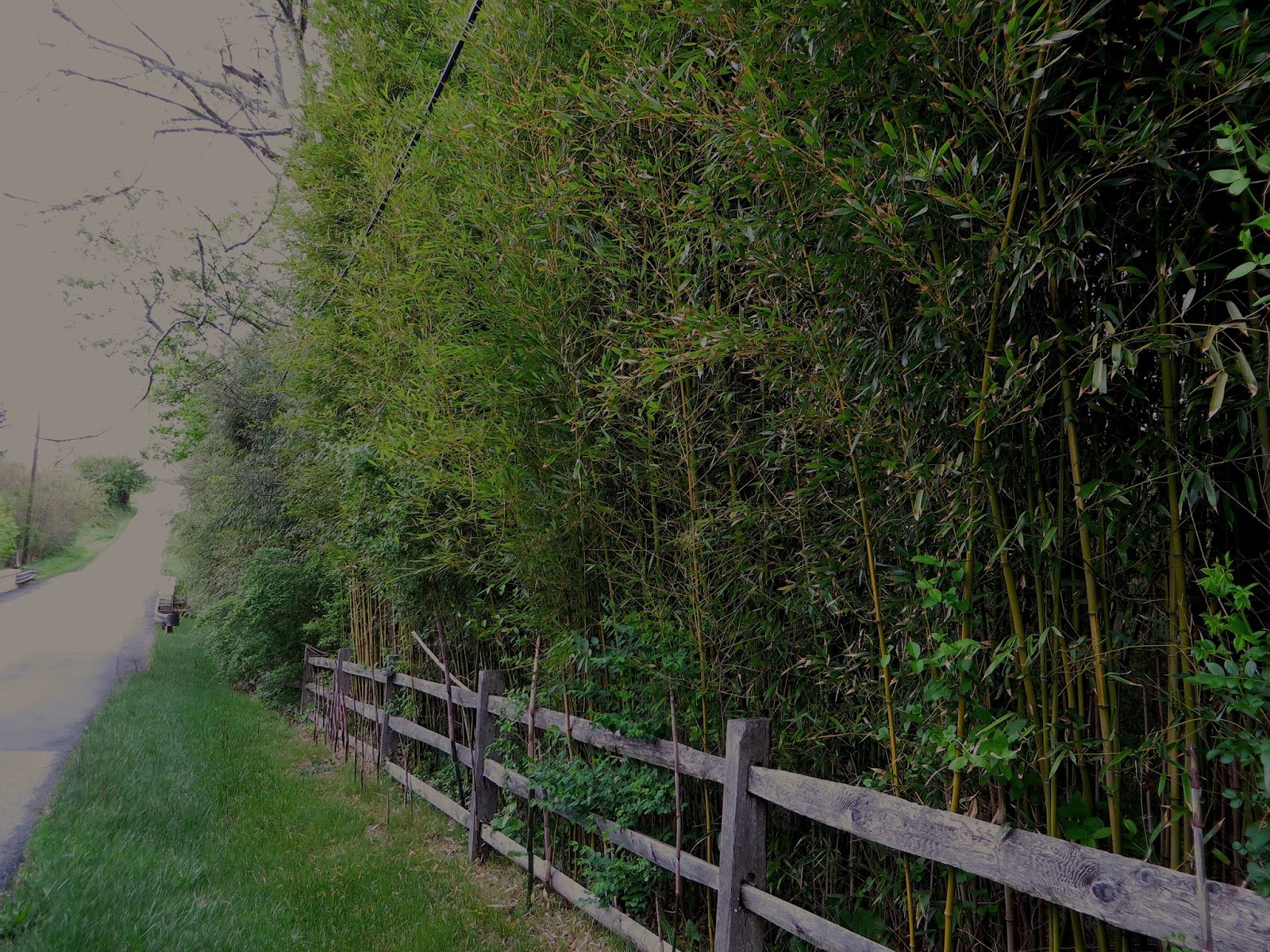
Bamboo is not particularly prominent this time of year but apparently it is the time to harvest. A family from northern China was entering a bamboo thicket in the county.  I showed her some shoots harvested from Western Run.  They were ok but she prefers twice that thickness and up to twice the length.  It should be peeled as shown, boiled for couple of minutes and then stir fried.  Southern China will eat them raw in salads and without the boiling but she gets stomach upsets without the boiling step(also adds oil and seasonings).  The nearest bamboo stand might be on the hill going up Charles to Bellona west side. Good hunting. She said the end of the month will be too late.  Is there a little tension between north and south China?

Western Run grove where handful of shoots were found

shoot as taken,smaller than ideal by half

Grove to be harvested,went well into the center to get larger shoots

Shoot before and after she peeled one. Tried small amount raw. Again need larger size


Ruxton First Week May, Tent caterpillars,Poppy, Ground ivy,Dead nettle,Violets,Vinca,Princess tree

Seemed like a relatively cold and rainy week for early May,18th week of the year.  Here are some of the noticeable changes in the Cloverlea/Rolandvue area.

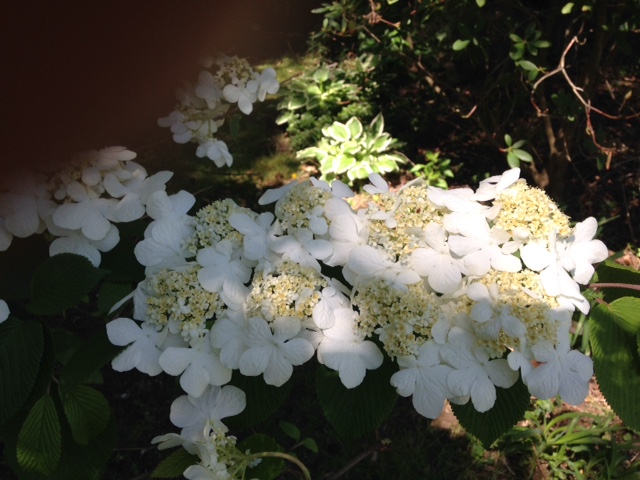
Last week we showed the Dogwoods but inquiring minds want to know about the other white flowers around the neighborhood.  A good general guess is probably Viburnum and two are illustrated here,  double file Viburnum and Snowball Viburnum.  These were toward the end of Wagner on the north side.  Being more in the gardening area I will only mention that Viburnum is also called arrow wood.  Otzi  the glacier man,discovered after centuries under ice in the Alps, was carrying arrows made of viburnum.
Two viburnums,double-file to the left and Snowball to the right


Two close -ups of the Double File


closer view of the snowball viburnum


the tiny flowers surrounded by showy bracts. Would you rather be the flower or the bract?


hairs on the leaf veins are common with Viburnum but here very subtle


We saw web worms in the trees last fall, shown in an earlier post.  They tended to be on the ends of branches.  Now the tent caterpillars are infesting some of the fruit and nut trees.  They are at the more central junction of branches and the trunk. Caterpillars cluster like this to feed as a group, to control their temperature and affect predation risk.  The "Web" is moderately unconcerned about the long term effect on the trees but it can be fatal.


The Wood Poppy is on the south side of Cloverlea near the entrance of Cloverlea Lane. They are in a compost heap, suggesting they may have been transferred with the mulch. There are some look-a-likes but I am going by the fuzzy bud, matches the wood poppy illustrations. There is also the typical yellow to orange sap.


As you scan the ground cover in the woods there is a purple color attributed to at least four plants: Violets, Vinca, Ground Ivy, and Purple Dead Nettle.  The violet flower is the easiest with the parallel lines on the lower petal to guide pollinators.  So edible the flowers are on restaurant salads. The leaves are a little more pointed than the others.  The Vinca is more cultivated but does escape and appear in the woods.  Ground ivy and Dead Nettle are both in the mint family, square stems, aroma when leaves are crushed, but the dead nettle is purple on the stem and the top leaves. The violets were along the driveway at the top of Cloverlea but all four are widely scattered.
The lower petal shows the linear marks,can vary in color.

More pointed leaf tip than the others,less margin indentation.
Here is the Vinca from the north side of Cloverlea.  Trailing stems  can take root helping to spread into broad patches, Vinca is not mentioned by the foraging references. Vincristine a chemotherapy drug is isolated from a relative, so pretty active little chemical factories.


This is a patch of creeping charlie,or ground ivy on the south side of Cloverlea. Note the leave margin ,tendency to grow like a vine, the flowers growing in pairs or whorls from the stem rather than the top. Stem is square so there is a smell of mint.


This is the purple dead nettle.  Slight purple on the top and the stem, flowers from the top,maybe less notching at the leaf margin, also square stem.  Ground ivy and dead nettle are more or less edible but seem to be used for teas given their mint family connections. It's "dead" nettle in the sense of no prickers.

Missing from the common ground covers is henbit, but probably also present.  A lot of Chick weed but no obvious henbit? All are moderately invasive but there are those suggesting they make a better ground cover than grass.


The Princess trees are on the west side of Charles near Charles Way.   Their purple blossoms are out and petals are on the bike path.  No purple flowers along Rolandvue so if there was a Princess Tree it may have been edited.
Purple flowers could be the purple version of a Locust or Wisteria but high power view below is Princess Tree

Presumed Princess Tree blossom


Thursday, May 5, 2016

Last Week April Dogwood,Redbud,Azalea,Garlic Mustard,Horse Chestnut,Dandelion,Mayapple

Having done an overall survey of the Rolandvue ,Cloverlea walks, we may try a series of weekly posts describing the most dramatic plants along the way.  For the last week of April(2016) here are some of the common sights.  Remember my enthusiasm for this is partly foraging and partly a recent conversion to nature observations.  All mention of plants as food are tentative and identifications are open to revision.

The dogwoods are the most visible feature, more gardening than naturalist, but then it is all part of nature in the general sense.  At least Cornus florida is a native.  Notes from the web: the name may relate to hardness of the wood,in old English was Dagwood. Dag as in Dagger, hard enough to hold a sharp point.  The Anthracnose fungus seems not be a problem in the neighborhood.  There are no brown or purple splotches on leaves,no cankers.  Was the concern about this an over-reaction or is it still a threat? The fungus has been recognized for almost fifty years, but maybe some treatment lessened the effect.The dogwood twigs were broken and chewed to make toothbrushes in pioneer days.   Interesting the Kousa dogwood is not yet flowering.


Redbud, mostly on Rolandvue is passed its prime, the picture is from further north in the county. This is also more in the gardening area, but some references consider the flowers to be edible.


Azaleas are also common, a member of the Rhododendron family, some varieties are native.  There are thousands of cultivars favored for the long blooming characteristic. Watch for the leaf gall in the late spring. I am often asked "Papa can we eat all the flowers?".  Clearly the answer is no and azalea is one not to try, along with all the Rhododendrons.  There is less than ideal evidence on both ends of the nutritious/poisonous spectrum, not a lot of science. Oleander is poisonous but maybe not as poisonous as in the movies, violets are good but do not make a steady diet of them( or of anything).


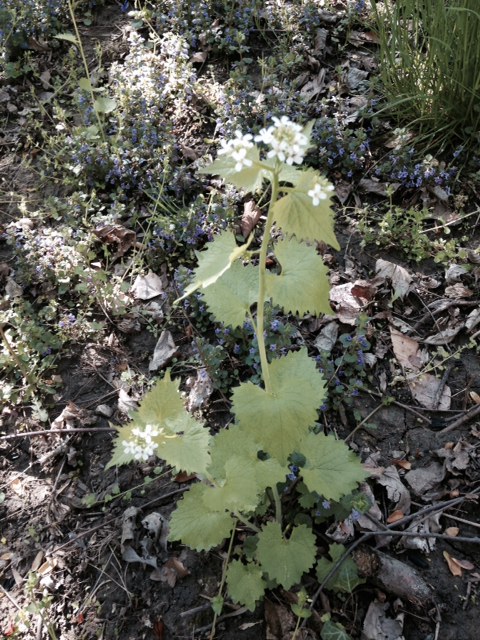
We have mentioned the garlic mustard as a yummy edible or detestable invasive weed. The ID on this plant seems so clear that I do munch on some of the young leaves, with no ill-effect so far.  The garlic taste varies from plant to plant. The taller visible weed is the second year growth of the biennial pattern.  Note the small white flower.


There are numerous small horse chestnut plants around,  often in the same area as deer browse(corner of Cloverlea and Rolandvue).  Do they not care for the horse chestnut?  Or does the horse chestnut out-compete for other reasons?


You may have heard the term "using the royal weed".   It refers to Dandelion,the Queen of the edible weeds.  All parts can be used, greens, wine, potherbs, even the hollow stem can be used for a straw.  There is a vacuum collection device for the seeds but no good use for them as yet.


Clumps of Mayapple are also common along the end of Rolandvue toward the lake and along Cloverlea.  The flower is hidden under the large leaves as is the latter fruit.


Monday, April 25, 2016

Garlic Mustard, Second Controversial Neighbor

Garlic Mustard was one of the most dominant plants this 17th week of 2016, late April. You will see it everywhere on your walks
Garlic Mustard,white four petal flower,heart-shaped leaf with  toothed margins.

close-up of the flowers, there tend to be patches of plants rather than these single specimens.
now that it is in bloom.  Last fall it seemed just a oddity. But these would be second year plants growing from last fall basal rosettes. It is another plant with pros and cons.  It is popular with foragers but considered invasive by ecologists and gardeners.

One of the oldest known spices, found in 8000 year old cooking remains, it is said to have properties of both garlic and mustard.  Sensitivity to the taste and smell varies, I get a fairly mild taste while others in the family find it too strong. The foraging references note salads, sauces and pesto as options.

On the other hand, being a European native it does not have natural enemies here so grows more vigorously.  The plant produces allelochemicals, cyanides,which suppress the growth of competing plants.   Various compounds, glycosides, make it less tasty for deer, so by eating competing plants and disturbing the soil garlic mustard is favored by deer browsing. It is in the mustard family like the bittercress and will produce saliques with hundreds of seeds. Hand-pulling is suggested for control but the central white root can be deep.  Seeds survive up to five years so control has to be continuous.

Hairy (exploding) Bittercress, Trick or Treat?

We were only back for a couple of days when we found out about the controversial new neighbors.  This is the first, winter bittercress, popping bittercress, or hairy bittercress.  On one hand it's an interesting show, the popping seeds, on the other hand the seeds spread three to six feet and the plant becomes invasive.

From Dave's Garden:  A Brassicaceae, blooms all year, self-pollinating and grows well in moist soil.  The small flowers vary in color from white to pink or lavender.  Each plant has a six week life cycle, but the exploded seeds germinate quickly and start a new larger colony. It can be introduced from nurseries.  He suggests hand weeding rather than chemicals.

On the other hand the exploding seeds should impress kids of all ages, as a light touch sends then flying.  As they dry they will explode anyway so feel free to touch the plants near our mailbox, then we will see  the result over the next few months. There is a Youtube video in slow motion.

Shown is the mature grass-like plant, the tips are the sensitive area, and then the rosette at the base of a younger plant,paired opposite leaflets with a single large leaflet at the tip.   A few feet up the driveway is a younger plant, ready for kids in a few days.  Elsewhere in the neighborhood you are on your own, touch the plant or pull it up. Being in the mustard family the young leaves have a pepper taste, not tried since these were all near the road with unknown chemical history.  A European native, the invasive reputation means they could be harvested freely.

The view of mature plant,brown grassy tips(siliques) are the popping seeds.

rosette of an earlier plant,