Saturday, November 25, 2017

End of November: What is a Novice Forager to Do?

This is in response to a question about the seasonal changes in foraging,what is available?.  It will also be a short sketch of what is out there along Cloverlea and Rolandvue.  The summary at least at the foraging 101 level is --not much.  You would need to be both hunter and gatherer.  And fire-builder.  The little remaining food out there would need proper cooking to break down the cell walls, aid digestion.  If you can't build a fire your plant identifications will be mostly worthless.

There is still a lot of green.  I will not picture the dandelions, plantain, and dock.  They are still there and probably still useful in emergencies. Most references suggest the early leaves, particularly in the spring.  In the fall there is a tendency for the nutrients to concentrate more in the roots, there is not much science on the nourishment left in the fall greens.  There is the wild onion/garlic which will be there most of the winter.  With softer soils they can be pulled, may require digging to get the small white bulbs.  This would be a little support and prevent scurvy.   Greater celandine is still up, has some medicinal uses but a toxic orange sap, creeping charlie is green and probably safe.  Next to the wood poppy(celandine) was winter creeper.  This is a newly noticed invasive vine also not popular as a forage.

There does not seem to be good use for the holly. The birds can eat the holly berries and us apex predators eat the birds.  Ivy is also not generally suggested as forage although V mentioned that it can be an animal feed when necessary, not a preference.  The arbor vitae can provide a tea with vitamins but not much calories.  Most of the invasive vines have died back, the kudzu and the porcelain berry. The acorn crop seems light this year, it does go in cycles, and acorns take almost as much energy to prepare as they yield in form of food.  It would be better to let the feral pigs eat the acorns and the beechnuts, then enjoy a luau.  But I have not seen many pigs eating the mast at the end of Wagner Road.

You could chew on the twigs of the spice bush, corner of Cloverlea and Rolandvue, to assuage the hunger pangs.  I can imagine the ancients approaching the winter solstice with a feeling of unease.

Wild garlic,species of onion,allium oleraceum, present most of winter

Garlic mustard, looks healthy,same smell and taste, some vitamins?

Greater celandine,toxic, some herbal uses when properly prepared

probably mock strawberries, leaves edible, variable GI effects

Ground ivy, edible in moderate quantities,should be creeping, attached at nodes, mint family

Arbor Vitae, tea of terminal leaves can supplement vitamins.

A lot of holly with berries but not forgeable 

Also a lot of Poke Salad, looks tempting but poisonous.

Friday, November 3, 2017

Deeper in the Weeds: Feverfew vs Chrysanthemum

We found an interesting plant in the woods a few yards off Rolandvue, no where near a garden which looked like some of the images of feverfew.  When the botanists looked at it the first impression was a garden variety (escapee) chrysanthemum.  Now a former name for feverfew was Chrysanthemum parthenium so the distinction could be considered minor.  The latin now is Tanacetum parthenium.  This post will raise more questions than it will have answers.   Ultimately are you interested in these microscopic characteristics, or happy with the general title of chrysanthemum?  What does this imply for the medical and chemical qualities of the the various plants?  What about the use as foraging? There may not be true science as yet.  We will illustrate some of the fine characteristics that would be needed for a final opinion with the detailed dichotomous keys.

We had a garden chrysanthemum for comparison, but again there is uncertainty.  There are many cultivars of the garden flower and some possible hybrids in the woodland flower.  The true central flowers appear some what different the garden flower being concave and the woodland flower convex.  This could be a different stage in maturity.  The inferior calyx is different with the longer tighter green sepals on the woodland flower.  After a detailed dichotomous key analysis the woodland plant did seem to be more like the feverfew than the cultivated plant.

There is little science behind using feverfew for actual fevers, but it has been used as a treatment for migraine. the active agent is parthenolide.  The cultured varieties also have chemical activity ,an insecticide with the active agent being pyrethrin.  There is no clear analysis of which variety has the medical benefit, which has the insecticide or how the two merge into one another. The commercial interest focus on either migraine or the insect repellant not both, and they may be totally separate.

If you do get interested in the magnified appearance or even microscopic appearance there are many variations to learn.  It is not clear which if any correlate with the chemistry of the plant.  If the cup is smooth rather than rough is it therapeutic or not?


garden leaf below,woodland ? feverfew above
close up of flower with the possible feverfew on the  right


difference in the calyx, feverfew above

Add caption

Saturday, October 21, 2017

Plants in the Parking Pad: Plane Tree, Locust, Elm , Redbud

You have your favorite latte and your favorite paper, but before you relax you just have to know "what is that unusual tree near the curb?"  It's a common problem because the trees around the Starbucks are not the same you would have seen walking along the trail.  I will start with the Charles Street store near Eddies(Towson area of Maryland) but may add to this post until we get to most of the common street trees in the immediate area.

Straight toward the street from the entrance is a line of sycamores along the sidewalk. Sycamore is the general category but these are probably London plane trees a cross between the oriental and the American sycamore.  The details of the cross are lost in the 18th century.  Leaves are intermediate between the two species and the fruits are two per stem vs one per stem on the American sycamore.
The hybrids are fertile and seedlings might be found in the area.  It is difficult to get a good count although the seed balls are present this time of year(October).  Part of the ID is based on the location, the tree is more tolerant of pollution and may actually remove some toxins from the air.  The native sycamore likes its feet wet and would be less likely to grow well in the urban setting. The latin would be Platanus x acerifolia.

Some negatives are fine hairs on new leaves which can exacerbate asthma, the leaves breakdown slowly, and it may be a host to some pests such as the ash borer.

Across the parking lot are trees with the bipinnate locust leave arrangement but with no thorns and no pods. they are turning yellow in the fall as expected and do have the dappled shade of the locust.  There are variations in the cultivars going under the names such as Sunburst and Shademaster.  Pluses are the lack of messy pods, the absence of thorns, the partial shading, bright yellow spring and fall colors and tolerance of urban conditions.  It is subject to some diseases such as webworm.  The latin gets complicated, Gleditsia tricanthos var. inermis.  A honey locust which lacks the usual three thorns.

Between these two groups of trees, also near the street are some redbuds, these seem to be the native trees preferred for their fast growth, pink spring flowers and the golden fall colors.  Latin is Cercis canadensis.  Negatives for the street use are the relatively short life, some disease susceptibility and the need to manage the multiple trunks to preserve the structure.

Dutch elm disease has taken the numerous original elms but resistant cultivars are being widely planted.  If you are sipping coffee in Roland Park there are elm variations in the median.  Also note the same thornless locust along the sidewalk.  There are so many cultivars I made no effort to ID further but interesting to see the elm making a comeback.  Next trip  I will get more detailed picture of the leaves and bark.

So it is a little off the trail but it is all part of nature in the broad sense, even Starbucks.

Tuesday, October 3, 2017

What's That Plant? Gout Weed, Burr Cucumber, Japanese Honeysuckle, Fringe tree,Yellow Buckeye,Virginia Creeper

Much of the second September session at the Natural History society was spent on the grasses, particularly those from Lake Roland.  There is an ongoing project to control some of the invasives in the park, which will require some spraying.  The project is an attempt to measure the effect of the herbicides on the surrounding flora.  This is up on the serpentine area, and involves the current grasses.  The discussion was interesting but we would need a guest post to do grasses.  Take away for foragers is the plan for spraying deep in the park, you need to know your area for safe harvesting.

Someone brought in a burr cucumber, a native plant, but invasive in the sense of interfering with corn and soybean culture.  We have that growing over the cunninghamia tree on the north side of Rolandvue where the greenhouse had been.  It has the unusual fruit and the coiled tendrils.  One plant can grow to almost 100 pounds and put out 40,000 seeds.  The photos are from internet for convenience, it was covered last year. Latin is Sicyos anqulatus.


There were a few additional points made about the fringe trees and why both trees are bearing fruit even though they were supposed to be a male-female pair.  The leaves are opposite, at first breaking the MAD Horse rule, but as close relatives of olive trees fringe trees are also in the ash family and thus  should have opposite leaves.  The leaves were small for the native species and so the two trees are probably asian.  They may have both been female, but some trees including olives can change there sex according to environmental conditions, such as temperature, polyandrodioecious (sp), this can be whole or only some branches. A tree appropriate for the political times.

  The fruiting of both trees may indicate other asian fringe tress in the area, or maybe hybridization if there are native fringe trees nearby. Finally there was a question about emerald ash borer.  Fringe would be in the Ash family but apparently not a lot of data as to the susceptibility.  The Asian variety may have an edge, or maybe not.

We showed a branch from the horse chestnut at the top of Cloverlea.  There was agreement that the two trees are yellow buckeyes, but no argument with calling them horse chestnuts.  They are in the horse chestnut family, just native to Ohio and have the smooth capsule around the nuts.  They have the opposite leaves and the opposite branching as expected.  It is hard to estimate the age of the two buckeyes, almost certainly planted, flanking the driveway, they probably pre-date the house built in 1952.  They may account for many of the small buckeye trees in the neighborhood but most have not yet been bearing nuts.


The nut of the horse chestnut A. hippocastanum above and the yellow buckeye, A. flava  below


There were two vines, a Japanese honeysuckle, and the Virginia Creeper.  Virginia creeper with the five leaves grows like poison ivy but not the leaves of three.  It is turning a deep red in some areas.  The honeysuckle is the addition to MAD Horse, MAD CAP Horse to include honeysuckle and viburnum.  Leaves in opposite pairs go with red berries in opposite pairs.  Apparently being the vine it is not a native variety statistically.


A late entry was goutweed, Aegopodium podagraria.  The illustration is also from the net, since I have not recognized it in the neighborhood.  It is so common it is almost certainly around. Other names are snow-on-the mountain, ground elder, and bishops weed.   It is an invasive from Eurasia, in the carrot family like Queen Anne's Lace.  It is about three ft high, flowers in umbrellas and hollow grooved stems.  The stem may have a triangular profile indicating no toxicity(compare with water hemlock).  Leaves are compound with more leaflets at the base.


Saturday, September 16, 2017

Mid-September 2017 Part Deux: Fringe Tree Fruit, Healthy Oregon Grape,Common Evening Primrose

We mentioned the  Fringe tree in the early summer and are now back to see the small purple fruit.  The tree is in the olive family so the fruit is edible.  Like the olive it needs treatment, most commonly pickling before it is useful.  Have you tried olives right off the tree?  The fruit of the Fringe tree is mostly seed so the reward for effort is small.  It is rarely used.

The two pictures are from each of the two trees on either side of the driveway, north west side of Rolandvue.  There are comments on the internet suggesting that the trees need to be of opposite sex, they are dioecious .  I am uncomfortable talking about sex so may leave it there.  It is possible there is another male tree in the area.  Or it may be that fruit is not a definitive sign of female tree, perhaps a sterile seed is possible.  Or there may be another explanation, will discuss with the naturalists. Maybe artificial insemination.


Add caption
fruit from both Fringe trees ? both female trees.

As an update the leaves of the Oregon grape which seemed stressed earlier are now a nice bright green.  Every leaf has a story to tell, even if it is just looking normal.  The earlier yellow and red color, a sign of anthrocyanins, may have been a sign of temporary dysfunction.  They now look healthy.

Oregon grape leaf returned to a healthy color from red earlier. (new" adventure" bike intruding)

Another possible new entry is the tall yellow flower across the fence, north side of Rolandvue near the field.  Tentatively I am calling this the common evening primrose, Oenothera biennis.  It is interesting to watch if your walk takes you by there at different times of the day.  The flowers open in the evening as the name suggests and close by noon of the following day.  There are illustrations of a primrose moth online, resting on the flowers in the evening, but not visible as yet.  As usual there are numerous medical uses for the plant and the entire plant is edible at various stages.  The scent is said to be lemony, not too obvious but this was in the morning.


stem and flower of common evening primrose at 9 am.


Thursday, September 14, 2017

Beauty Bush,Asiatic Dayflower, Willow Oak, Late Boneset (Mid-September 2017)

There is an unidentified plant around the 920 area of Rolandvue with striking bluish-purple berries.  In response to numerous requests we are including a photo.  It is more in the area of gardening than in  wild plants but probably Beauty Bush ,Kolkwitzia amabilis.  It is another Asian native which like Gingko is no longer in the wild but frequent in cultivation.  It is in the honey suckle family, note the opposite leaves and the berry distribution similar to honeysuckle.

It has the typical arching branches, maybe not as large as 10 feet, so may have been trimmed back. The branches are expected to peal during the winter.  There will be numerous sprays of bell-shaped flowers in the spring.  We missed this last year, may have been early spring.  Wiki says the plant was most popular between the two world wars, unknown if this one could trace its history back that far.

There is no agreement about foraging the berries.  A summary might be that it is non-toxic but inedible, having a disagreeable taste.  It is apparently not in the toxic plant data bases. Attempts at jellies have been made.  This is the only plant in the area so harvesting would not be suggested anyway.

Many of the Asian honey suckles have become invasive but this one seems not to be on that list. Watch for the pealing bark in the winter and the flowers in the spring.


Probable Beauty bush on the south side of Rolandvue near 921#.

Last year there was some discussion of the willow oak on the east side of Rolandvue  100 yards north of Cloverlea.  There had been no clear acorns.  It turns out the acorns on the Willow Oak take two years to mature, and there are now numerous nuts as shown. It is a favorite of arborists, longer-lived than the Water Oak, branches stay higher and the superficial roots do less damage to pipes and sidewalks.  The leaves give a dappled shade allowing some undergrowth .


definite acorns on the willow oak


A perspicacious observer noted a small blue flower along the shoulder of Rolandvue heading downhill toward GBMC.  This is another new addition, being small it may have been overlooked, although most states call it another invasive: Asiatic Dayflower Commelina communis .  The flowers have the two prominent upper blue petals and the small lower white petal. It has a prostrate stem lying low on the ground until the flower portion shoots up.  As the name suggests, the blooms last only a day.  The flower can make a dye sued by Japanese painters.  It is a candidate for restoring mined areas since it accumulates some metals in its leaves and stems.  It is also used in studies of plant physiology.


the leaf and the flower of the Asiatic Dayflower


Near the fence on Rolandvue, not far from the fig tree is a white flower, on tall stalks.  There are a number of flowers with similar pattern, but with this late summer bloom and this leaf pattern we are suggesting late Boneset, Eupatorium serotinum.  It has the tubular flowers in a flat top inflorescence, other bonesets tend to bloom earlier, and it is not the related white snakeroot.  The leaves have petioles,stems, while the common bonnet has clasping leaves.  It is food for numerous insects.


the leaf and flower of possible late boneset, shows leaves with petiole

Tuesday, September 12, 2017

What's That Plant? (Natural History Society): Elecampane,False Nettle, Spanish Needle(Bidens bipinnate)

This was a mixed group of plants that had been puzzling which we shared with the group of naturalists.  I do not remember seeing the spanish needles before.  The group felt I was not guilty of bringing these in on my boots.  They were along the road where spread by any random car or truck could occur.

The Bidens is tall, 3-5 feet with multiple branches, leaves are hairless double or triple pinnate with irregular clefts.  There are the ray flowers typical of Aster family.  Roadside is a common habitat, along with disturbed fields and ditches.  Flowers and seeds provide food  for a wide assortment of insects and birds. The trident-shaped seeds are partially hidden but can be seem by breaking open the maturing flower.  It was difficult because the leave and flower are different from most Bidens(beggar tick ).

It is growing in a few places along the north side of Wagner Rd.


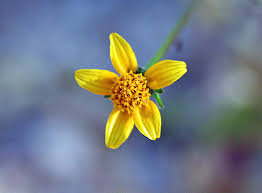
five petal flower of spanish needles, from Wikipedia

The tick seeds which will stick to clothing later in the year, presently these are hidden

The large plant with square stems(not a mint) and fern-like leaves, not as typical of most bidens  family.


The Elecampane or Inula also known as horse-heal, was growing along Charles Street in a group across from Sheppard Pratt.   The large leaves with the white mid vein looked like curly dock until it started blooming.  It also has the ray flowers of aster family.  It is about 4-5 feet tall. It is spread by the tears of Helen of Troy. It was widely used as a tonic and a cure for rabies.  It is native to Europe. It is both grown for its flowers and cursed as being a foreign invasive.  I am pretty sure it was not there last year but could have gone unnoticed.  Both will be making copious seeds so may become more evident.


large, slightly curled leave, looked like dock.

upper leaves are clasping, helped with ID

ray flowers typical of the aster family


We did a foraging walk where stinging nettle was suggested as a green with extraordinary nutritional value.  There is a large patch of true nettles down by Towson run and then this plant along Cloverlea Road.  But this version was not stinging, no hairs along the stem and leaves.  So this was keyed out as False Nettle, It has the square stem, the opposite leaves with long stems and the serrated oval leaves but no sting. I will ask Nick if it is equally nutritious.  One test is by touch using palm side thicker skin if sensitive to the sting, back of hand thinner sting if less sensitive.  Then apply a poultice of jewelweed for the sting.  I am fairly sensitive so used a magnifying glass.  It looks a little like clear weed, covered earlier but not the translucent stem.  The spikes green flowers are a characteristic.  You can find real stinging nettle blindfolded, not false nettle.


these little spike flowers are one element of the ID of false nettle

false nettle, looks a lot like stinging nettle.