Thursday, September 8, 2016

Rolandvue,3rd Week August: Virgin Bower, English Ivy,Kudzu,Bind Weed

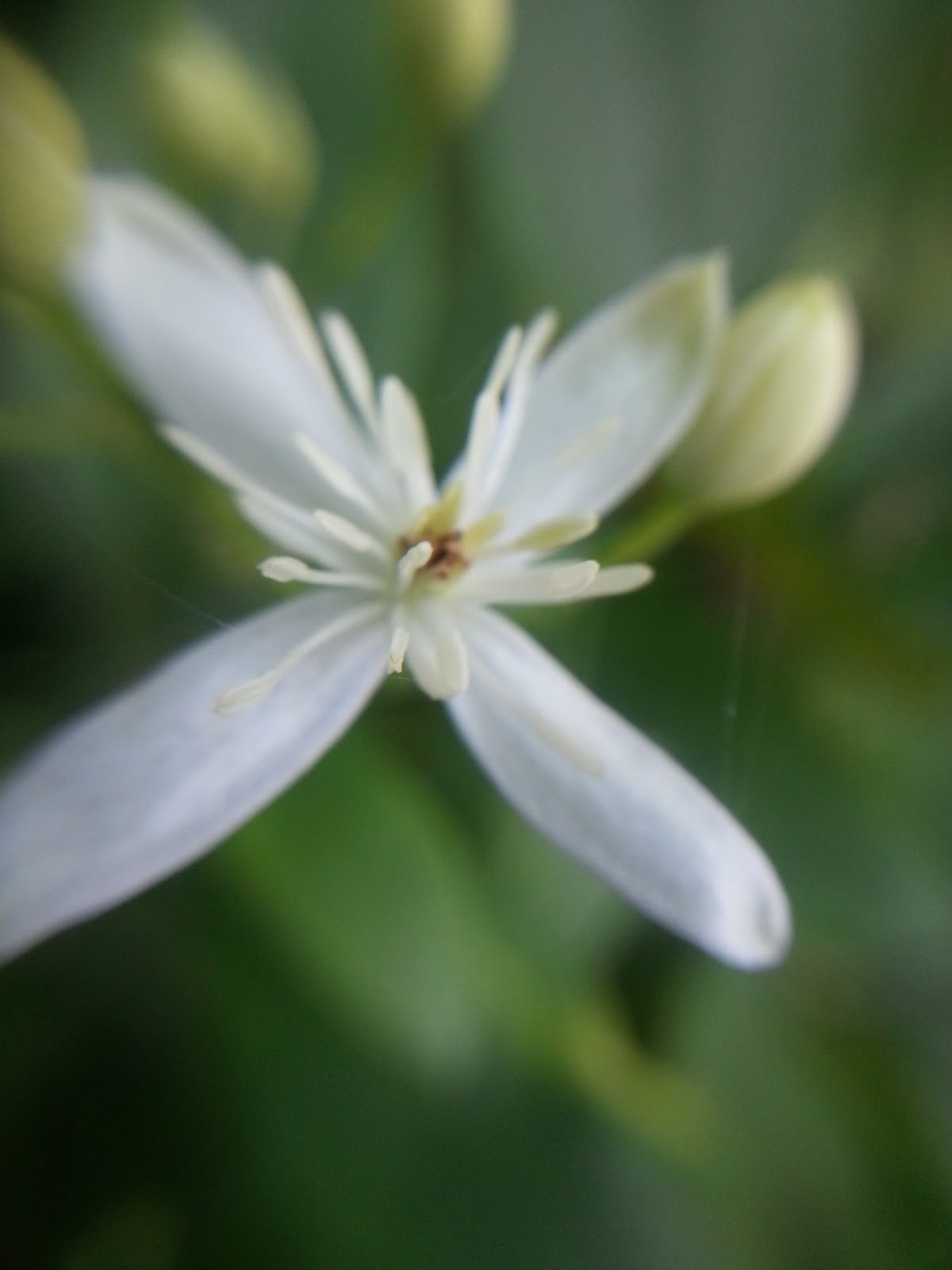
On the foraging walks with Victoria,we ran into about twenty different vines.  Here in August with little active flowering we will look at a few of the common vines in the area. Clematis virginiana or virgin's bower is flowering at this time of the year.  The photo is actually from the first of September with even more active blossoms.  The latin is just a suggestion, that is the native species and common, but there is also an asian species(Clematis terniflora),more florid and more invasive.  A gardener may be more specific.  Here the leaf margin is smooth or entire not typical in many Clematis illustrations which are coarsely sawtoothed. The leaves are opposite,pinnately compound in groups of three leaflets.  The leaf margins may go better with the Asian cultivated variety.

More certainly it is in the buttercup family, Ranunculaceae, and therefore mostly on the poison or toxic side. As is frequently the case native Americans did find some medicinal use for the plant. The seeds were used as a pepper substitute. In small doses it was used for headache, higher doses were toxic.  Some may be sensitive to the oils on the leaves and need gloves for handling.  This is a planted specimen at the top of Cloverlea, but there are some "wild" or escapees along Rolandvue and occasionally around Lake Roland.

Foraging is mainly for the flowers, but selected species are "only slightly poisonous". Remember to boil it.

Update: Both samples, along the Cloverlea fence and "wild" along Rolandvue are the asiatic species, entire leaf margin and stronger fragrance.


Some of the English ivy(Hedera helix) is also flowering this week.  The photo is from the top of Rolandvue hill.  Another ambivalent plant.  It grows well, is evergreen and Victoria claims that sheep or goats can get through the winter browsing ivy if there is no other forage. Some states rate it invasive, others encourage it as a wall cover to moderate temperature and weather damage. But on buildings it can invade gutters and roof tiles.  The berries ripen in winter, useful for birds, but moderately toxic to humans.  In some parts of the neighborhood it seems to be a nice ground cover and in others invading and choking trees.


alternate leaves vary with species and age of plant
flowering common ivy


younger leaf common ivy


The kudzu photo is from the west side of Cloverlea about halfway down the hill.  It seems possible that the vine that ate the South is less dangerous than its press would suggest. Rather than spreading by the square mile it is spreading by the acre.  It kills other plants by smothering, lowers biodiversity, and outcompetes local species.  On the other hand it is a world champion nitrogen fixer (500 pounds per hectare) and has relatively large nutritious roots.  The vine lifestyle allows it to concentrate more energy in the root and less in the woody stems. It can spread by growing from nodes along the vine or by seed after insect pollination.  

Kudzu was one of those, beware of unintended consequences, cautionary tales.  It was actively supported by the government as a shade plant, erosion control and cover crop. Then quickly put on the invasive list and spending ten times the promotion investment to control it.  Control could be by wild goats, can eat an acre a day.


trifoliate leaves with 2 or 3 lobes,long stem
seed pods a member of the pea family,nitrogen fixer


kudzu vine with purple stain prominent hairs

close-up of three part leaf with lobed leaflets


The bind weed has been in a previous post but has been impressive in its persistence.  It also grows quickly, is easily removed by hand but seems to come back overnight.  Controlling some of the vines with hand pulling, some suggest leaving the debris on the bed as fertilizer.  But some vines grow back even from cut fragments. I am bagging the bindweed.


The arrow shaped leaves of bindweed growing among pachysandra


Wednesday, August 31, 2016

Rolandvue,2nd Week August: Fireweed (Erechtites hieraciifolius)

Another quiet week as far as blooming plants.  Fireweed is common along Cloverlea and Rolandvue.  There are a number of pioneer species, early to appear in cleared areas, which are called fireweed so another argument for using the latin name. Features to notice are the serrated leaf margin,often lobed, alternate , simple, attached to a thick stem.  It is in the lettuce family, native to North America.

The seeds are spread by the wind, but it also grows  in clumps with multiple stems.  There is a thick clump at the corner of Wagner and Rolandvue. This area has been cut and possibly treated chemically encouraging the fireweed.

Despite its lettuce association it is not commonly mentioned as a foraging prize.  Peterson calls it an acquired taste, but suggests use in salads and as a cooked green.  Opinions vary  as to the strong odor or the perfume.  For some it is a famine food only and for others a delicacy( Eat the Weeds).


Fireweed or American burnweed common this week

Tuesday, August 16, 2016

Rolandvue, 1st Week August: Cicadas,Funnel Spiders, and Web Worms,Golden Garden Spider

There are few blooming plants to indicate the calendar, so for a week let's switch to animals. The droning undulating white noise in the background is obvious this week.  As yet there are no bodies or dried shells to see but this is probably cicadas.  There are the periodic 13 to 17 year cicadas, and some of these are not completely synchronized so appear at staggered shorter intervals.  So there may be broods of the periodic insects but there can also be some annual cicadas(Tibicen chloromera).  The illustration is from the internet since nothing yet obvious on the ground.

Locust is mentioned as a noise maker but is a different insect related to the grasshopper.  I have not seen these either, not as common in Maryland and less likely as the source of the sound. The cicadas eat relatively little after digging out of the ground, concentrating on the mating cycle. The loudest noise is the relatively small adult male.  The mating occurs on twigs or leaves which then fall with the larvae shich dig into the ground to restart the cycle.  So a noise indicating back to school time is approaching. You can try to identify species on the songsofinsects.com website.


Cicada from wikipedia,watching for a local specimen


We mentioned the web worms(Hyphantria cunea) in an earlier post, but they have suddenly become more visible this week.  Recall that this is the web at the end of branches and more late summer to early fall.  The tent caterpillar is spring and near the central tree branches, not the periphery.  It is a native of North America, now introduced worldwide, a little payback for the reverse invasions. We are right on the dividing line between one and two generations per year ( 40 degrees N) but it seems to be a single cycle. Usually there is not permanent damage to the tree.

The funnel spiders(Agelenidae) have been around since the spring and get mentioned here because of the photo.  These guys are shy and fast, not giving much to posing for pictures. The markings look pretty characteristic.  They compete for the gold medal speed for spiders with their much larger relatives.  They weave the flat webs in grass and bushes, more obvious in the morning when covered with dew. They use a paralyzing venom but are not generally a danger to humans. As the fall comes they will look for homes near or in the neighboring houses. Females are the better,more successful hunters.


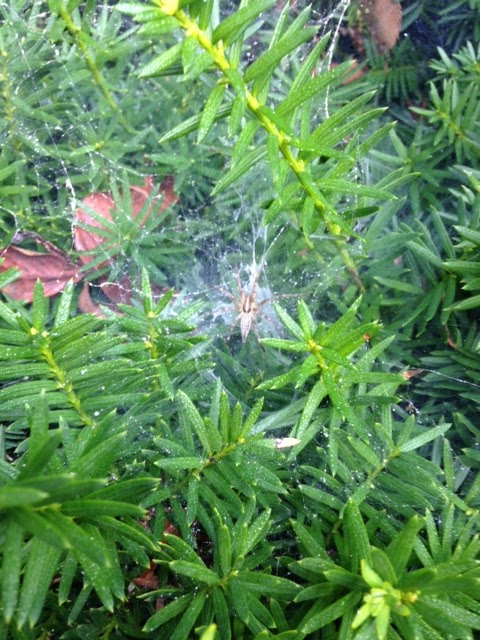
Also noted this week was a relatively large golden garden spider, Argiope aurantia, with a dense three dimensional web in the bushes along Wagner.  The Z pattern in the center of the web is typical of this spider.  The spider is on the other side of the web, while the camera focuses on the web.  This is probably a female, larger with a larger web.  There may be a smaller male web nearby. Prey is insects and small vertebrates, killed by a toxin but not a toxin dangerous to humans. This spider was on the edge of a field or yard as is typical.


yellow garden spider


Monday, August 8, 2016

Rolandvue,4th Week July: Bindweed and Canadian Thistle

During the walk at RE Lee Park, the ranger mentioned that not much was blooming in the park at this time of year. So the plants go on a vacation of sorts.  There are two with prominent flowers, both with reputations a little on the noxious side.

Bindweed is in the morning glory family, comes in a couple of flavors, this trying to overgrow  the shrubs is probably field bindweed.  Although pretty, it is aggressive and difficult to eradicate.  It can re-grow from roots going down 30 feet (or maybe they meant 30 feet long, roots need oxygen too). The two pictures show the change in buds from early morning to noon.  Here is another example of the motility of plants, opening and closing their flowers in response to heat, humidity or light. With latin name convulvulus arvensis, it is a non-native invasive. Bindweed does not get much attention from foragers, is mildly toxic to animals. Note the arrow-shaped leaves, about two inches long.


The early morning appearance of bindweed flower,septals separate varieties.

Appearance of bindweed flower in midday. Did not track over 48 hours, may last only one day.


Canadian thistle is also known as lettuce from Hell, or cursed thistle. It appears in colonies since spreads along the thick net of roots. Leaves are spiny, and clasp the stem. Illustrated are the feathery seeds or pappas,up to 1500 per plant, designed to spread on the wind. Foraging notes mention the roots as being edible but "gassy."  These were along Bellona Avenue.


Feathery seeds of the canadian thistle, seen commonly along roadsides at the end of July

Thursday, July 14, 2016

Rolandvue: 3rd Week July, Tree of Heaven

Another candidate as a tree to set your calendar is the Ailanthus or tree of heaven.  About this time of year the tree produces masses of keys or samaras in light green clusters, contrasting with the dark green leaves.  These seed clusters, like the mimosa blossoms have been appearing in the area(particularly along Bellona) since the beginning of July.

This is another tree with strong Yin Yang.  Venerated in asia, it was grown for a particularly type of silk worm.  But it is invasive, can have a strong smell, and is also known as the Tree From Hell, difficult to eradicate. It is allelopathic, producing chemicals to inhibit other plants. On the other hand, it was the tree that grew in Brooklyn, center of the novel.


large leave with pinnate pointed leaflets,Tree of Heaven

clusters of seeds in July, Tree of Heaven


Friday, July 8, 2016

Rolandvue:2nd Week July,Mimosa, Clear Weed, Mulberry(dog that didn't bark)

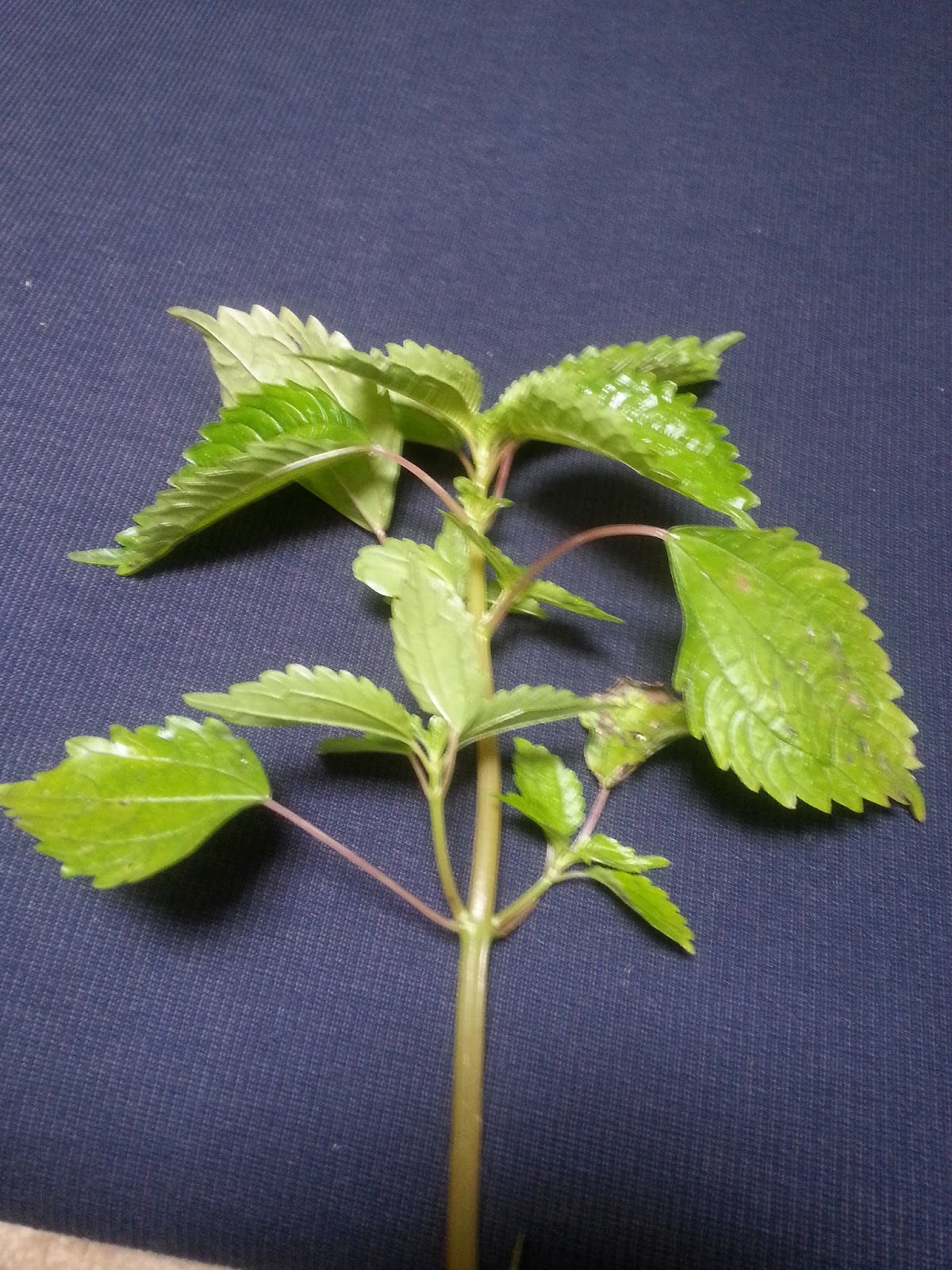
Clear weed is a relatively common plant for the warmer months, only a few inches high.  It is in the nettle family but without any stinging elements. The name is from the translucent stems, sometimes used in biology classes to show the movement of colored nutrients. The specimen shown is at the top of Cloverlea near the mailbox. It is easily pulled if not desired and a close-up is seen in the second photo.  The stem is squarish.  One reference says edible but not very palatable.

Clear Weed, small nettle like but non-stinging,serrated leaves
almost square translucent stem of Clear Weed


Generally the mulberry on Cloverlea would be staining the road purple, but as here the mulberry crop in the area has been thin.  V says they are beyond their normal time for ripening.  So the blank space is this year's mulberry harvest.  Maybe next year.


We like to feature plants to set your calendar by.  The Mimosa trees in the area may qualify. There does not seem to be a tree right on Rolandvue, but on Bellona, as well as Mays Chapel.  To be more  precise the trees have been blooming for about ten days, so blooms really mark the first of July. Get closer and there is a sweet smell, but for some an allegic sensitivity.

The leaves are thigmonastic, respond to touch, heat, or cold.  Might be an interesting school project.  This may be one of the trees closing its leaves at night, though possibly a reaction to temperature.


close-up after shaking the leaves,did seem to respond

profusion of sweet smelling blossoms

over view of the mimosa on Mays Chapel

Friday, July 1, 2016

Rolandvue:1st Week of July: Chickory(white), Golden Rain-tree, Smartweed,Cow Parsnip

If you are waiting for the bus on Charles Street near GBMC, turn and look at the patch of chickory behind the safety railings.  There is the usual tall blue flower but toward the back there are some bright white flowers.  V says this is not uncommon but usually just one white flower to a group.  The photo doesn't show the real difference, will return with better light. Another example of variation in nature.  You can dry the root, grind it into coffee while waiting for the bus. Even close-up does not show the difference the eye sees, maybe a blue white, would need a wavelength analysis.

chickory,blue in foreground, white in background,may need to  go look


closer view of white chicory,camera does not  like  the contrast


Further along Charles, almost to the top of the hill near Bellona is the Golden Rain Tree.  Last fall this was somewhat a mystery, just going by the papery fruit, but the flowers make it more certain to be a Rain Tree. This is from Asia, said to be common around temples.  Bladdernut was in the differential diagnosis but the fruit of the golden rain-tree fits as well. This is also seen in Naples Florida, a wide range of hardiness zones, 2 to 7a.


Flowers of the Golden Rain-tree leaves and paper capsule seen last fall

View of the Golden Rain tree from Charles Street

Another common feature along the roadside last week and this week is the grass which I am tentatively calling Pennsylvania Smartweed, or smart grass. Tentative because it doesn't have the joints or knees as prominent as some of the reference pictures.  But it is one of the characteristics of the season.

probable smartweed,commonly seen along all the road sides
At least some of the smart weeds have a peppery taste which may be conclusive, it can be used as a seasoning in small amounts.
(update) Checked with a couple of foragers, does seem to be Polygonum pensylvanicum, with small knees or joints.  It is in the buckwheat family.  None of the local samples seemed peppery or smarting to the taste.  Not sure of the variation, when others use it for pepper substitute.

Cow Parsnip is so far an out of bounds topic, but interesting.  The similar but larger Giant Hogweed and the parsnip have a toxic sap from the hollow stem which can cause a severe rash.  The rash requires exposure to the sap,followed by exposure to the sun or ultraviolet rays. This is not in the neighborhood so,if interested can follow the discussion on the web.  The picture is from Cuba Road as it crosses the Western Run bridge, about ten miles north of Rolandvue.  V has found this in the city and forages the early shoots as a delicacy but there seems to be some evidence for the skin toxicity of the older plant.

probable Cow Parsnip,top is almost six feet high,toxic sap